
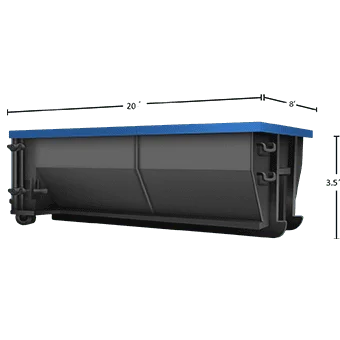
A container-sized gap is not a complete delivery plan
A roll-off is a temporary debris container placed and collected using a specialized vehicle. It is useful when a project needs an on-site place for an accepted load, but a narrow empty rectangle does not prove that a particular vehicle and container can work there.
Describe the full proposed operation: the entrance, turning or positioning area, container location and space used while debris is loaded. Share changes in surface, slope, gates and overhead obstructions for supplier review. Request the actual vehicle and equipment requirements; do not rely on generic dimensions from another job.
Test collection before choosing the easiest loading spot
Consider the site as it will look at pickup. Materials may have arrived, a fence may have changed, or vehicles may be using the approach that was open on delivery day. A placement that allows comfortable loading can still fail if the truck cannot later reach the agreed position.
If two locations are available, compare both with the supplier and property representative. One may require a different loading route but preserve collection access. Another may conflict with people entering the property. Choose an authorized arrangement that supports the whole operation, not simply the shortest distance from the debris pile.
Resolve an unsuitable position before equipment arrives
If the preferred position is unsuitable, ask about a different approved spot, a different offered container or a change in the loading and collection arrangement. Availability and suitability must be confirmed together. A smaller container is not automatically a solution to a vehicle-access restriction.
Do not substitute a road, sidewalk or neighboring property without the required permission. The supplier’s agreement to rent equipment does not give the customer control of public space. Where public access could be affected, establish the responsible authority’s conditions before treating that location as part of the order.
Keep the accepted access and load conditions together
The order should identify the approved position, accepted debris, loading limits, rental period and collection arrangements. Discuss weight and fill conditions as well as capacity. Explain whether another collection might be needed so the provider can describe the terms instead of assuming an unlimited service.
Keep access clear, do not move the container independently, and report a changed approach or unexpected material before pickup. Ask the provider how to prepare the load for collection. If a gate or site contact changes, notify the supplier while there is still time to agree a workable visit.
Questions before you book
Can I decide fit from container dimensions alone?
No. The supplier must also assess its vehicle approach and handling space, overhead restrictions, surface conditions and later collection access.
What if the loading area changes during the rental?
Tell the provider before blocking the agreed approach or changing the position. Discuss a safe, authorized alternative; do not move the container yourself.
Can the container go on the street if the driveway is too small?
Only an appropriately authorized arrangement can be considered. Rental acceptance is not public-space permission, and the supplier still needs to approve the actual operation.
Does choosing a smaller size solve a tight entrance?
Not necessarily. The delivery vehicle and handling requirements may still be unsuitable. Ask the provider to evaluate the entrance and equipment together.