
Start with the user need, not an equipment label
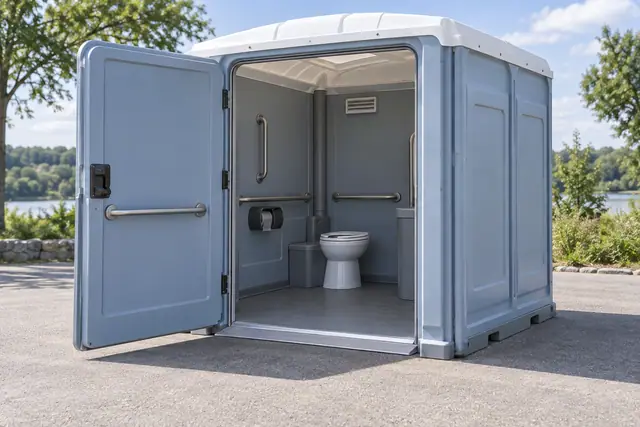
A wider-entry portable format may provide a different entrance and interior arrangement from a standard cabin. Features vary, so ask for the actual specification rather than assuming every larger unit has the same dimensions, supports or door operation. A photograph or the word accessible is not documentation of the particular model supplied.
Explain whether the arrangement must accommodate mobility devices, assistance from another person or a difficult existing approach. The supplier can discuss available formats, but a product selection does not settle every condition outside the unit. The property representative needs to be involved where the route or surrounding surface is the problem.
Follow the route a person will actually use
Consider where people arrive and where the relevant work or gathering takes place. Then examine the route to the proposed restroom, including changes of surface, restricted gates, temporary cables or objects placed near the entrance. An apparently suitable cabin can remain difficult to use if its approach depends on crossing a rough or obstructed area.
Allow for the door’s operation and a person leaving the unit without stepping into a queue or vehicle path. The provider also needs a workable servicing approach, but a truck’s ability to reach the cabin is a separate question from the user’s route. Both should be resolved before the proposed position is treated as final.
Choose the correction that solves the actual barrier
If the obstacle lies on the approach, requesting a still larger cabin may not solve it. Discuss whether the agreed position or route can change, whether an obstruction can be removed by the responsible site party, or whether a different equipment arrangement is needed. Do not improvise a ramp or move a delivered unit without the appropriate parties agreeing to the change.
Handwashing belongs in this assessment too. A separate station should be reachable and usable by the people relying on the restroom. Ask about the actual station arrangement, supplies and care; sanitizer should not be described as identical to soap-and-water washing. A trailer option also needs its particular entrance and utilities assessed rather than being assumed easier to use.
Keep the agreed arrangement usable throughout the rental
Give the supplier the proposed format, site position, use period and people expected, together with any access question still unresolved. The quote should explain delivery, collection and servicing, and identify the model being offered. Request any documentation needed by the organizer or property rather than treating a general service description as a compliance certificate.
Someone on site should keep the agreed approach clear and report changing conditions, low supplies or an unusable entrance. Decorations, storage and parked vehicles can alter a route after delivery. Resolve those changes with the responsible site contact and provider so the arrangement remains useful for the people it was intended to serve.
Questions before you book
Does a wider cabin automatically make the whole setup accessible?
No. The actual model, approach, entrance, surrounding space and washing arrangement all matter. Ask for the offered equipment’s specification and assess the real property conditions.
Should I describe the users’ needs when requesting a quote?
Yes. Explain the practical needs relevant to choosing and positioning equipment without sending unnecessary personal medical information. Include any known issue with the approach or existing facilities.
Can the unit be placed wherever the delivery vehicle can reach?
Vehicle access is necessary for delivery and service, but users also need a suitable approach. The agreed position must address both rather than using one as proof of the other.
What should happen if the route becomes blocked?
Notify the responsible site contact promptly and keep people from relying on an unusable arrangement. Discuss an appropriate correction with the provider if equipment location or service access needs to change; do not move the unit yourself.