
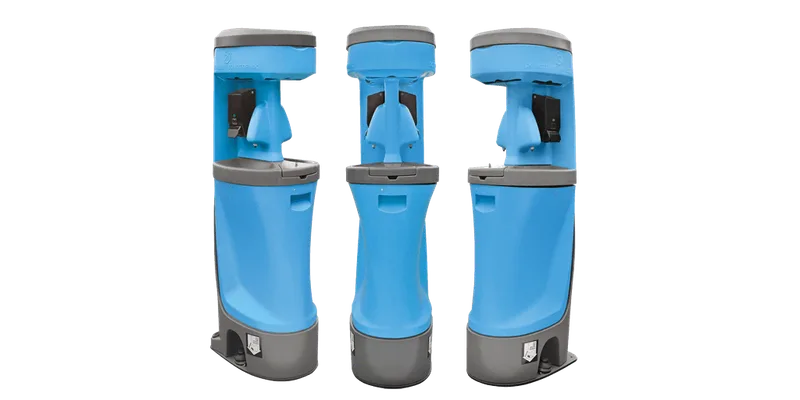
State the role the washing point must serve
People washing after ordinary restroom use are one use case. Food preparation and certain workplace activities can create different requirements. California’s construction washing order also distinguishes ordinary provision from some specialist washing needs. Do not assume a general rental basin provides every function those activities require.
Describe the actual role in the enquiry. If the requirement comes from an authority, site procedure or food-operation arrangement, have the responsible party explain the accepted function and specification. The rental conversation should identify what equipment is being offered, not replace a specialist review with a generic station label.
Compare an independent station with an identified in-unit basin
A stand-alone station can place ordinary washing outside a toilet cabin, while an offered enhanced model may provide a basin within the unit. Confirm the actual model rather than inferring the presence of a sink from the word deluxe. Consider whether the washing point can be reached by the people who need it and whether the proposed position makes sense beside their restroom route.
Assess user access separately from the supplier’s ability to deliver and service the unit. A location that is easy for a vehicle but awkward for people does not settle the selection. If the station is meant to serve users relying on a broader-access restroom, discuss the washing arrangement’s actual usability too.
Plan for supplies to be consumed
Washing uses water, soap and drying supplies and creates used water that must be managed. Ask which items the supplier provides, how replenishment is arranged and what the site contact should observe between visits. A useful order identifies these responsibilities rather than ending at the moment a station is placed.
The expected use and duration affect that discussion. Explain whether use is concentrated around a break or spread throughout the day and whether people remain outside the main event hours. Do not invent a refill capacity or assume a standard service interval without the proposed equipment and actual use information.
Include care and removal in the arrangement
The quote should describe the station, period, delivery, servicing, supplies and collection. Identify a contact who can report a problem clearly and give the provider access. If the washing function becomes unusable, tell the provider what has happened rather than leaving people to assume an installed station is working.
Do not repair pumps, add unidentified substances or discharge used water onto the property. Discuss the correct response with the provider and responsible site contact. Keep the agreed approach and collection position available through the end of the rental, including the time when the last users are still present.
Questions before you book
Is hand sanitizer the same as a handwashing station?
No. Soap-and-water washing has different functions and supply needs. Confirm what is required for the actual use and what the offered station provides.
Does every deluxe toilet contain a basin?
No. Ask for the specification of the offered model. If washing is not included or suitable, discuss a separate station.
Who refills the station?
That should be stated in the accepted service arrangement. Clarify supplied items, provider visits and what the site contact checks or reports instead of assuming the responsibility.
Can we empty used water ourselves?
Do not discharge it on the property or improvise disposal. Follow the provider’s agreed servicing arrangement and contact them when capacity or operation needs attention.