
Identify the components in the current agreement
A historical Anderson community-services agreement distinguishes the bandshell with KC1, gazebo amenities, and the Teen Center plaza/restrooms from additional studio or kitchen space. Those distinctions are useful questions to raise with the operator; the old form is not confirmation that a particular combination or current booking is available.
Ask for the current agreement to identify the booked space and any optional component you intend to use. If the plan depends on a kitchen, room or restroom not included in that agreement, resolve that gap before describing the event as having those facilities. A facility name on an invitation is less precise than the actual accepted arrangement.
Separate the gathering from adjoining use
Describe where guests, workers or participants will spend their time within the included components. People using another room or nearby public space may not share the same permissions. Avoid planning as though all facilities on the property are reserved for the group, or as though every neighboring visitor is part of the attendance you are supplying for.
If the arrangement changes from one component to another, identify whether the same confirmed restrooms remain available to the group. This is not a reason to add equipment automatically. It is a reason to decide which actual users and periods the temporary setup needs to cover, and to make any uncertain existing access clear in the enquiry.
Choose equipment to fill the identified gap
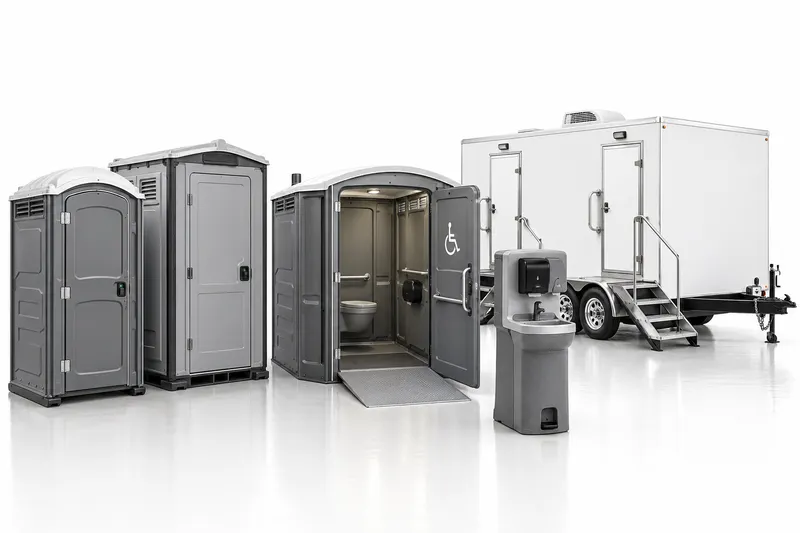
A standard portable cabin can add a private, self-contained toilet where a permitted position is available. A broader-access format may be appropriate for users whose needs are not met by the ordinary cabin. Discuss the actual approach and offered model; the presence of an existing restroom or a larger cabin is not proof that the whole route works for everyone.
Plan soap-and-water washing separately unless the offered arrangement provides a suitable basin. Enhanced cabins and restroom trailers may have additional features, but their supplies, connections and space need confirmation. Compare those functions with the facilities actually included in your booking rather than selecting equipment to match the building’s name.
Include the equipment’s full occupation period
The historical agreement distinguishes the booked rental day from adjoining days and restricts lawn vehicle access without approval. Confirm the current conditions for your actual facility. A supplier’s proposed arrival or collection outside the booking cannot be assumed acceptable simply because the event itself fits within the booked time.
Tell the supplier who can approve the location and admit the vehicle, when the equipment will be used and who will monitor supplies or report a problem. Ask the quote to identify delivery, care and collection. If the accepted facility components or use period change, revise those details before leaving the original restroom arrangement in place.
Questions before you book
Does the old Anderson agreement prove a room is included now?
No. It shows distinctions to ask about. The operator’s current written agreement must identify the actual spaces and amenities included for your dates.
Should we add a toilet if an existing restroom is listed?
First confirm that the group can use that restroom during the intended period and that it meets the practical needs. Supplemental equipment may address a remaining need; a listing alone does not settle it.
Can delivery take place on the day before the booking?
Only if the property arrangement and supplier’s confirmed schedule permit it. Include the complete equipment occupation period when obtaining approval rather than assuming adjacent-day access.
What information makes an Anderson quote useful?
Provide the exact facility and address, included components, attendance/use periods, confirmed existing facilities, proposed equipment position and the person who can resolve access and care questions.