
Confirm what the listed facilities mean for your group
The park information describes facilities at the Upper Sacramento River setting, including restrooms identified by the operator as ADA restrooms. Ask whether the relevant facilities will be open and usable during the group’s actual activity. A public amenity listing does not establish exclusive access, sufficient capacity or a confirmed arrangement for a particular event.
The route from the booked activity to those facilities also matters. The listing’s description should not be extended into a certification of every approach, surface or temporary event layout. Explain any practical need the organizer already knows about and resolve it with the operator rather than assuming the word restroom settles the entire plan.
Identify the gap before adding equipment
There is a difference between an existing restroom being temporarily unavailable, a group needing additional capacity and a particular user being unable to reach or use the available arrangement. Describe which problem applies. A larger quantity of ordinary cabins would not necessarily resolve an inaccessible approach, while a better route would not replace a closed facility.
If existing facilities are dependable for part of the use period, explain where the uncertainty begins. The rental may supplement rather than replace them, but the supplier needs to know which assumption the proposed quantity relies on. Do not claim a current closure or shortfall merely because additional equipment is being considered.
Compare a supplemental setup with a self-contained arrangement
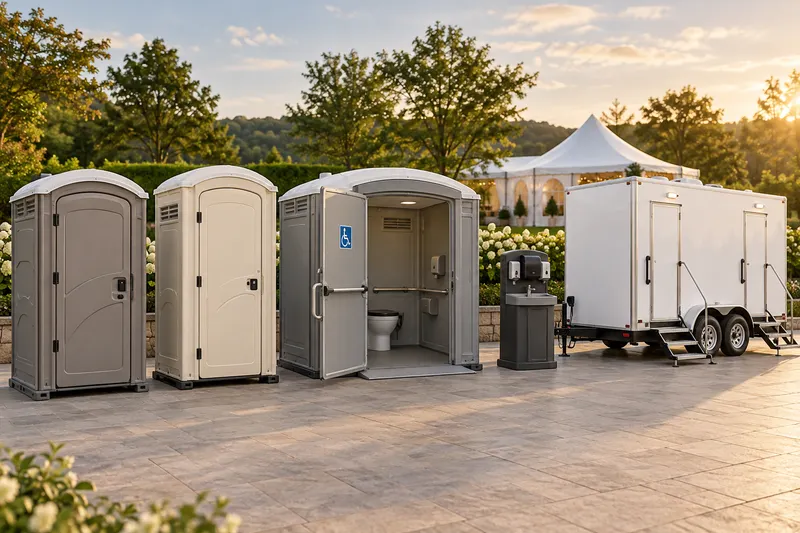
A standard portable cabin provides a private toilet without relying on a building bathroom. A broader-access model may be appropriate for the actual users, with the equipment specification and approach considered together. Separate washing may be needed even where the primary request was simply for another toilet.
For an enhanced cabin or trailer, identify the features and any connections or support it needs before choosing a position. The operator must agree to outside equipment at the actual location. An attractive spot near the activity does not automatically provide a suitable surface, a usable entrance or provider access.
Describe one clear arrangement to the operator and supplier
State which existing facilities are confirmed, what supplemental equipment is proposed and how long people will need it. Identify the approved position and the contact who can resolve delivery or collection access. If a contingency depends on bringing additional equipment later, ask whether that is feasible rather than representing it as guaranteed.
The quotation should cover the offered equipment, supplies and care, delivery and final collection. Someone on site needs to observe whether the arrangement remains usable and report a problem. Revisit the order if the existing-facility assumptions change, instead of expecting the original supplement to cover an unplanned full replacement.
Questions before you book
Does the park’s restroom listing mean our group needs no rental?
Not necessarily. Confirm access, hours and the practical needs of the group first. Supplemental equipment should address an identified need rather than be added or ruled out from a listing alone.
Does the listing certify the event layout as accessible?
No. It describes the park’s facilities. The actual approach, temporary layout and offered rental equipment still need assessment for the people using them.
Should I report a possible closure as a definite fact?
No. Distinguish confirmed conditions from a contingency. Ask the operator about current availability and tell the supplier what is known and what is unresolved.
Can a rental supplement existing restrooms?
Yes, that is an arrangement to discuss. Identify which existing facilities remain dependable, which users need the supplement and how washing, service and collection will work.